
How landfills work, and what could work better
Moving toward a circular economy
A waste crisis
Most of us are no stranger to the fact that we are living in a waste crisis. Two billion tonnes of municipal solid waste is generated around the world every year. Some of this waste is recycled. Some is repurposed. But a great deal of this waste is destined for the dump.
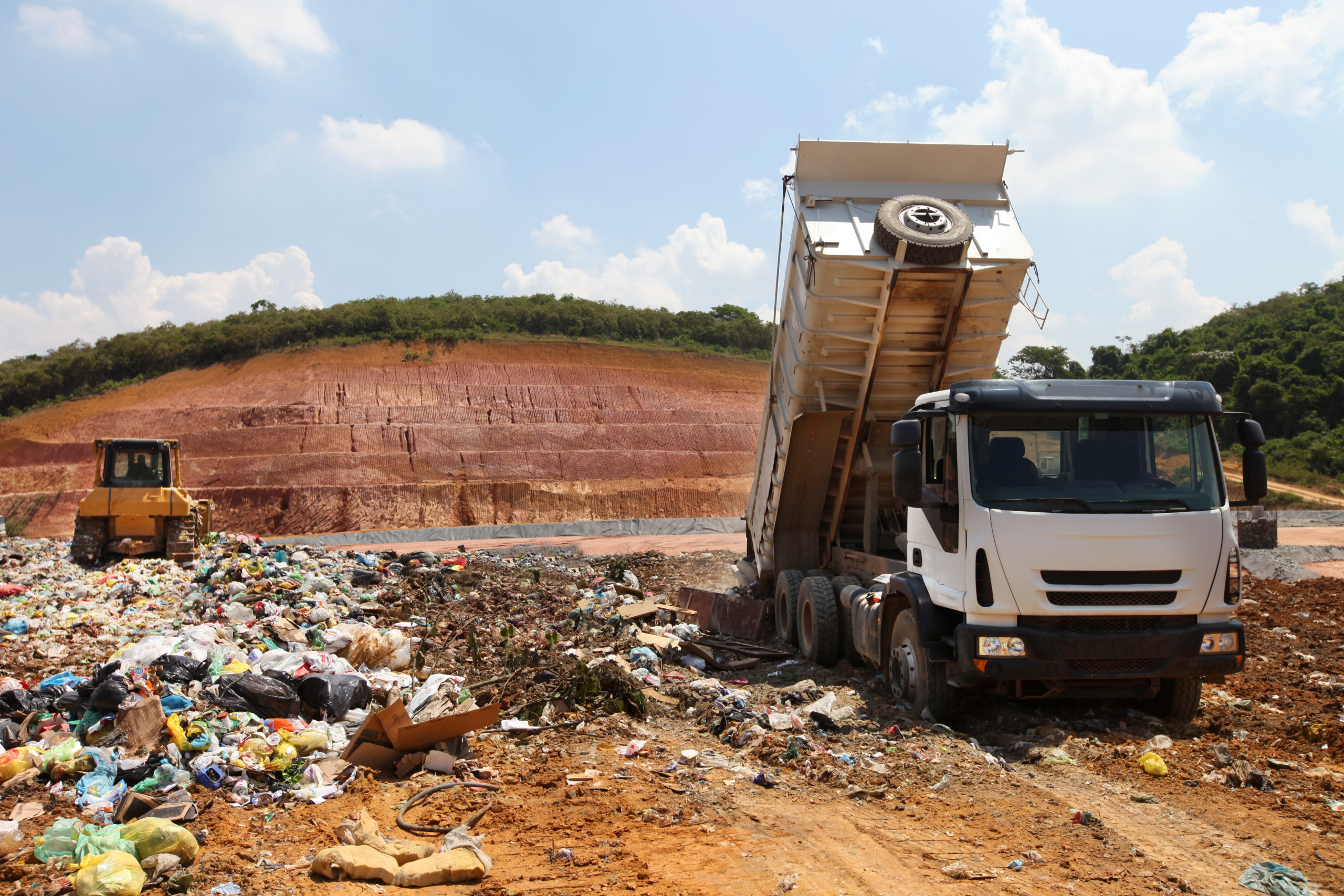
Landfilling is one of the most widely used methods for disposing of municipal solid waste (MSW) worldwide. Approximately 1.4 billion tonnes of MSW are disposed of in landfills or open dumps each year, representing around 70% of the world’s total municipal solid waste.
We are seeing a shift in some cities from a reliance on landfill to a more circular economy. This is good news—but we need the transition to be rapid, and global.
Out of sight, out of mind
Wherever humans live, municipal solid waste (MSP) is generated—that is, the everyday solids we discard, such as organic/food waste, paper and cardboard, plastics, glass, metals, textiles, organic/garden waste, hazardous household waste, and more. A 2019 study found that around 51% of our household waste ends up in landfill
But landfills provide the perfect “out of sight, out of mind” destination, right?
Unfortunately not.
Just a great, big hole in the ground?
If you haven’t been to a landfill, perhaps you have a vision in your mind of what a site might look like. This picture may resemble a giant hole in the ground. Most of us may not even think about it too much. But good waste management requires serious thought: it’s about considered systems which minimise consequences on the environment and public health.
We are currently living during a waste crisis on an epic scale—and it’s time for us all to get a good grasp on these big holes in the ground – and begin to think beyond them.
So, let’s dig a bit deeper!
Landfills, historically
The first recorded controls for MSP management are from the Minoan civilisation in Crete, which was active from 3000 to 1000B.C. Waste was placed in giant pits and covered with layers of earth periodically.
So, yes, essentially landfills are great, big holes in the ground!
Over time, however, there have been improvements.
But it is not enough. Current concerns around greenhouse gas emissions and the integrity of landfills over coming centuries should be a serious consideration in the waste management sector.
Landfills: How do they work?
The anatomy of a landfill
- Cells – Rubbish is compacted into areas called cells. Once compacted, cells are covered with a layer of soil and then compacted some more. One cell usually equals just one day’s worth of rubbish. These cells are arranged in a system of rows and layers of adjoining cells called lifts.
- Leachate – Rainwater moving through waste and soil layers collects contaminants such as chemicals, metals, and decomposition by-products, creating the acidic and toxic liquid known as leachate. Landfills incorporate strategies to manage leachate.
- Bottom liner system – This separates waste and leachate from groundwater and is a critical design component; landfills without a bottom liner risk leachate leaving the site and contaminating nearby surface waters and groundwater. Liners are usually some kind of durable, puncture-resistant synthetic plastic or compacted clay, or, ideally, a combination of both.
- Storm water drainage system – Keeping a landfill as dry as possible helps reduce the amount of leachate produced. This is achieved by preventing liquid waste from entering the landfill and diverting rainwater away through drainage systems, pipes, and collection ponds where water is tested before being released off-site.
- Leachate collection system – No landfill system can completely prevent water from entering the site. Perforated pipes throughout the landfill collect the formed leachate and direct it to a collection pond, either by gravity or pumping.
- Methane collection system – As waste decomposes in the oxygen-free environment of a landfill, bacteria produce landfill gas made up mainly of methane and carbon dioxide. Because methane is flammable and can pose an explosion risk, the gas must be collected through a network of pipes embedded within the landfill. Methane is a potent greenhouse gas and the second-largest contributor to global warming after carbon dioxide.
- Covering or cap – A protective covering of polyethylene and compacted clay seals off the top of the landfill from the air and prevents pests such as birds, rats, mice and insects from entering.
Managing leachate and gas
Landfill leachate generation and management are now widely recognised as some of the most significant challenges associated with the ‘environmentally safe’ operation of sanitary landfills. Leachate is produced because of complex physical, chemical, and biological processes, including infiltration of precipitation, biodegradation of organic fraction, and compaction of waste.
Generally, leachate contains four groups of pollutants: degradable organic matter (DOM), inorganic macro components (IMC), heavy metals (HM), and xenobiotic organic compounds (XOCs). Basically, the kind of stuff we don’t want leaking into surrounding waters and soil!
There is a range of options for leachate management available, though most have their challenges and limitations. Best practices rely on a multi-barrier approach: source reduction (limiting rain infiltration), engineered containment (composite liners), active collection, and specialized treatment prior to safe discharge or off-site disposal.
As waste breaks down in landfill, it also produces gas—mostly methane and carbon dioxide, as well as trace components such as hydrogen sulfide. This occurs through a natural decomposition process of organic waste (organic/food waste, paper and cardboard), primarily under oxygen-free conditions.
A massive reduction in organic waste sent to landfill would largely contribute to a reduction in gas production. However, considering Australians send roughly 5 million tonnes of food waste to landfill each year… well, we have a long way to go!
Landfill gases can be captured using a network of wells and pipes installed throughout the landfill. These systems collect the gas as waste breaks down and either flare it off or use it to generate electricity and energy. Effective gas capture helps reduce greenhouse emissions, odours, and potential health and safety risks. Despite reductions with management, there are always substantial greenhouse gas emissions associated with landfills.
Closure & aftercare
Even long after closure, landfills pose environmental risks. They are capped with layers of soil, clay, and protective materials to reduce water infiltration, odours, and gas escape. The site must then be monitored and managed for many years, including testing groundwater, controlling landfill gas, and maintaining drainage and vegetation. Some closed landfills are later converted into open space, parks, or solar farms, but they still require ongoing environmental oversight.
Circular economies: A new way forward
A circular economy is a system where resources and materials are kept in circulation for as long as possible, with a commitment to eliminating waste, reducing emissions and dissociating economic growth from an increased use of finite resources.
Now, let’s fly over to Wales, a nation that had very high landfill rates before implementing an entire strategy around circular economy. In 2021, Wales outlined their unprecedented strategy in Beyond Recycling, which aims to make the nation a zero-waste society by 2050.
How do they plan to achieve this? By supporting businesses to reduce their carbon footprint and become more resource efficient; by providing tools to enable ; to phase out unnecessary single use items, especially plastic; to eradicate avoidable food waste; to support goods and products that are made from recycled goods—or come from low carbon and sustainable sources; to strive for the highest rate of recycling in the world; to reduce impact of waste collection from homes and businesses; and, to take full responsibility for their waste.
Successfully transferring to a circular economy relies on governments, individuals, communities and businesses working together. A strong focus in the Welsh strategy is supporting community action. Communities around Wales are already leading the change, with many community-led initiatives working hard to combat waste. Just a few incredible examples of action include:
- FareShare Cymru is taking food waste by diverting quality surplus food from landfill to provide meals to vulnerable people. Volunteers deliver the food to homeless hostels, community centres, refugee centres etc.
- Repair Café Wales facilitates workshops across the country, where people can work together to share the skills of repair and re-use, “creating a culture of repair and reuse, to encourage communities that want to work towards a more Circular Economy”.
- Sustainable Wales is a grassroots organisation that facilities several projects, such as SUSSED—”a volunteer-run community cooperative founded by Sustainable Wales that specialises in ethical product”, and The Green Room—a space that hosts popup fairtrade cafes, clothing swaps, sustainability workshops and more.
Back in Australia, Sydney will run out of landfill space by 2030, and so must take urgent action. The state Government is actively intervening, through a combination of local policies and regional projects. The NSW Waste and Circular Infrastructure Plan aims to “guide decision-making and investment in critical waste infrastructure”. Chapter 1 of this plan focuses on the need for a safe disposal pathway for waste that cannot be diverted from landfill, and future chapters will concentrate on enabling higher order recovery, recycling, and reuse.
One recent sizable step in New South Wales’ shift to a circular economy is the introduction of reforms that require large food-waste-generating businesses, such as supermarkets and large catering companies, to separate their food waste from general rubbish. The separated food and garden waste can then be processed into useful products such as compost, instead of being sent to landfill. The state Government has also passed legislation requiring FOGO collection for households by July 2030. This is expected to divert up to 950,000 tonnes of household organic waste from landfill each year, and is an example of increased circularity within the state.
Conclusion
We are living in an age of excessive production, consumption and disposal. It is important to understand that landfills are not just giant holes in the ground where we can bury problems. They are complex, highly engineered systems that can continue affecting the environment and surrounding communities long after they close. They also represent wasted resources – where materials which could otherwise be reused or converted into something else are thrown away.
In a circular economy, we can limit extraction and production of virgin resources and maximise resource efficiency through good design of products and by prioritising repair, reuse and recycling. In a circular economy, there is no such thing as waste – we shift away from a take-make-waste model and keep resources in circulation for longer.
A circular economy is a better way!